
Once you start really developing a taste for coffee and try experimenting with various blends and roasts of coffee, one more factor you’ll start considering is the coarseness of your grounds.
In fact, there is a three part pyramid to making great coffee:
- Brewing method(this includes temperature, water, and ratio)
- Blend of coffee
- Coarseness of grind
What is coarse ground coffee?
Coarse ground is simply a way of saying that the coffee beans are ground into a small crystal-like consistency rather than a powder-like consistency.
Adjusting the coarseness of the grounds will influence how fast the coffee is extracted and brewed.
Grind size reference chart
The image below is a good reference of the kind of grind sizes there are. There is a quarter next to each of the grind sizes so you can get an idea of how coarse or fine each grind actually is:

What is the importance of ground coarseness
You are using the highest quality, freshly roasted coffee beans, mastered the temperature, you’re using the purest possible water, and your brewing game is right on point, removing the coffee at the exact time and with the exact delicateness required, yet you still end up with a bad tasting coffee.
This can even happen if you’re using a really high end machine that gets the temperature and brewing time perfect every time.
What’s the problem? It’s your grind size.
The grind size is how coarse or fine you grind your coffee beans. You can also use a manual grinder. As any barista worth their salt(or coffee) knows, the best and freshest tasting coffee will always be freshly ground from freshly – or as freshly as possible – roasted beans.
Depending on the brewing method, you’ll need to adjust your grind size – sometimes you’ll need a very coarse grind, and other times, you’ll need a very fine grind. Still other times, you’ll want something in between.
This is because of simple science: increasing surface area.
Put simply, a coarse grind exposes less coffee to water, whereas a finer grind exposes more coffee to water.
It’s the same science behind why granulated sugar will dissolve quicker than coarse sugar.
With a coarse grind, the water interacts with the coffee very gradually, gently extracting the flavor from the grinds.
With a fine grind, the water interacts with the coffee very quickly, extracting a lot of flavor in a very short amount of time.
Coffee is coffee, right?
Actually, picking the right coffee is not a straightforward task. Besides deciding on a coffee bean for the flavor, you also need to consider grind size/coarseness.
Coffees that use coarse grinds
Really, there are just two common coffee beverages that use coarse grounds: french press and cold brew.
French press grounds will be slightly less coarse than cold brew grounds, which will be very, very coarse.
The key factor behind the coarseness of these two coffee preparations is brewing time.
Coarse Ground Coffee for French Press
French press takes around 4 minutes to brew, which is quite a lot. In a french press, all the water is interacting with all the coffee at the same time. A coarser ground ensures that the flavors and oils are very slowly and gradually extracted from the grounds as the water slowly works its way into them.
Even though I am not a fan of pre-ground coffee, in some cases, you may prefer to use it, especially if you don’t have the time to ground beans yourself.
Here are 3 recommendations to try for brewing your next french press cup.
1. Gevalia Special Reserve Coarse Ground Coffee
The first suggestion on our list of coarse ground coffees for french press is the Gevalia Special Reserve.
This is an ideal coffee for french press. Typically, french press brews are very bold and full-bodied. The Gevalia Special Reserve has smoky, earthy flavors, which really complement the body you get from a french press brew.
You’ll even be able to pick up notes of cocoa, giving your coffee a chocolatey aroma and touch.
Gevalia sources these beans from a special coffee reserve in Guatemala, which is well known for great coffee.
These beans are fully Arabica, which are very flavorful and don’t have the bitterness commonly associated with robusta beans.
Even though Gevalia recommends these beans for french press and drip coffee makers, I would personally suggest you only use them for french press since drip coffee generally requires a slightly finer grind.

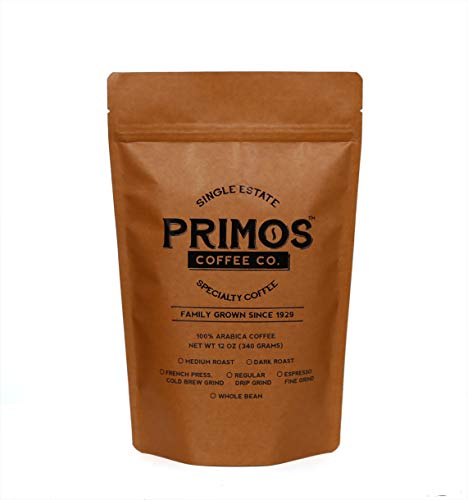
2. Primos Coffee Co. French Press specialty coffee
Primos Coffee Company’s French press specialty coffee is a really nice choice for making french press at home.
The beans are sourced from a family farm and grown exclusively for Primos Coffee in Nicaragua. Overall, these beans have a mild flavor. So even if you’re brewing with a french press, which tends to make a bolder cup, it will still be on the milder side.
This can be quite an advantage for you if you’re not a big fan of very intense brews. The flavors you’ll experience will be on the sweeter side with hints of citrus.
Personally, I prefer medium roasts such as these. Very dark roasts tend to be a little too intense for my taste, and if you’re just starting out with coffee, this is a good place to start.
3. Stone Street Coffee Cold Brew
Even though this coffee is advertised as ground for cold brew, you can certainly use it to brew french press coffee as well. Stone Street Coffee is a craft roaster and they source and produce some of the best coffees.
This is a dark roast coffee, which will result in a very bold cup with an intense jolt.
You have two options here: since the coffee is ground for cold brew, you can steep it for 5 minutes instead of the usual 4 to get a more intense and bold brew, or you can just steep it for the usual 4 minutes and enjoy a slightly lighter cup.
That’s what makes this coffee special: it’s like a two-in-one.
The beans are sourced from Colombia, and you can taste notes of dark chocolate and earthy flavors.

Can you use fine ground coffee for cold brew?
No.
I mean you could, but you shouldn’t. Cold brew is a slow and gentle extraction process and super coarse grounds ensure the gentlest extraction possible.
If you use too fine a ground in cold brew or french press coffee, you’ll end up with gritty, bitter or acidic coffee, and nobody wants that!
Is coarse ground coffee stronger?
Generally, no. The whole point o