Using a lever machine gives you a hands-on understanding of the art and science behind pulling a shot of espresso. In this roundup, we’ll highlight our favorite models and explain how they compare with other types of machines, like super-automatic and capsule systems.
If you choose to take up the challenge of pulling espresso shots by hand, then a manual espresso machine is the way to go.
Quick Overview: Best Manual (Lever) Espresso Machines
|
Best Budget
|
Best Enthusiast Pick
|
Best Premium
|

|
|

|
|
Best For:
Affordable, beginner-friendly manual espresso.
|
Best For:
Espresso lovers who want more capacity and a pressure gauge.
|
Best For:
Boutique heirloom machine admired by espresso purists.
|
Disclosure: “Check Price” buttons take you to Amazon, where I may earn a commission as an Amazon Associate.
What Exactly Is A Lever Espresso Machine?
A lever machine is quite different from modern automatics. Often called the classics of the industry, they give you maximum control over every shot of espresso.
You have control over every little detail that goes into your shot. Even with other machines, you would want to choose your own coffee beans and grind them manually, but in this case, once the grounds are ready, every other detail is up to you.
You have to heat the water to the ideal temperature.
You have to warm up the brewing chamber if necessary.
You have to tamp down and load the grounds into the lever machine.
You have to pull the lever and generate as much pressure as you see fit, timing the shot as you wish.
Automatic and semi-automatic espresso machines won’t typically let you adjust the timing of the shot. It will take a fixed amount of time to extract one 1.5 ounce shot.
In this case, you can pull the shot in 10 seconds or 10 minutes (not that we’d recommend that).
Direct Lever Vs. Spring Piston Machines
Manual espresso machines are of two types: spring piston machines and direct lever machines.
A direct lever keeps the handle in the down position when the machine isn’t in use. With this design, all the pressure comes from your hand, which means maximum control but also more variability depending on how steady you are. They are great if you want to experiment and fine-tune every shot.
Spring piston machines are recognizable because the lever stays in the up position when the machine is not running.
Spring machines use a special spring that pushes the water through the grounds for you. As you pull the lever down, you compress the spring, and when you release the lever, the spring decompresses and pushes water through the coffee grounds. The spring helps regulate pressure, so you get a smoother and more consistent extraction once you’ve got your grind and tamp right.
In this article, you’ll see both types represented. The Flair machines (Neo Flex and Signature) are direct levers, where you control the pressure completely by hand. The La Pavoni models (Europiccola and Professional) and the Ponte Vecchio Lusso are spring piston machines, which use a spring to help regulate pressure for more consistent results.
Core Features of Lever Machines
All manual espresso machines come with basic features such as:
- Steam Pressure Gauge
- Portafilter
- Manual Level to Control Extraction
You might notice the simplicity of a manual machine. While this is quite different from many of the machines in the semi-automatic and automatic bracket, these machines are extremely popular among dedicated coffee purists.
Now, rather than affording manual control over extraction, pressure and grind, those other machines have technology to do the work.
Because this is such a niche market, manual espresso machines sometimes end up being more expensive than a semi-automatic espresso machine.
After all, the folks who will usually look towards manual shot pulling will either be highly experienced professionals/hobbyists or someone who wants to dedicate themselves to learning the craft of espresso.
Managing expectations
Before getting into the machine reviews, I feel it’s important to point out that manual shot pulling is HARD. It takes a lot of practice and even experienced baristas may not get the first shot right.
Spring piston machines smooth out the process a little by regulating the pressure with a spring, which can make them more forgiving.
With a direct lever, all the pressure comes from your hand — giving you full control, but also more responsibility. A spring piston setup evens out the pressure for you, which makes it a little more forgiving.
Either way, there’s a learning curve, but once you dial things in, both types are capable of producing excellent espresso.
You may end up being spoiled for any other coffee once you dial in your coffee using a manual machine, though!
This guide from La Prima Coffee is an excellent primer on using manual espresso machines.
5 Best Manual Espresso Machines
1. Flair Neo Flex – Best Affordable Manual Espresso Maker
The ROK EspressoGC was once our number 1 pick, mainly because of it’s durability and lower price point. But since it’s no longer widely available, the Flair Neo Flex has stepped up to take its place.
The Flair Neo Flex earns the top spot for its affordability and beginner-friendly design. The lightweight frame (just 3 pounds) makes it easy to store or even pack for travel.
Operating the machine is straightforward. You raise the lever, let the water settle over the coffee, and then press down to generate pressure and pull the shot.
You don’t need any electricity for running this machine. But you’ll still need to get hot water from somewhere, and preheating the brew cylinder helps get the best results.
This is an extra step that some people may find cumbersome, but it’s part of the process with most manual espresso makers, including others in this roundup.
Does that mean you can pull a super-automatic level shot? Not exactly, unfortunately. But with a little bit of practice and tweaking, you can pull a rich, crema-topped espresso that you’ll have the satisfaction of knowing is the work of your own two hands.
2. Flair Espresso Maker
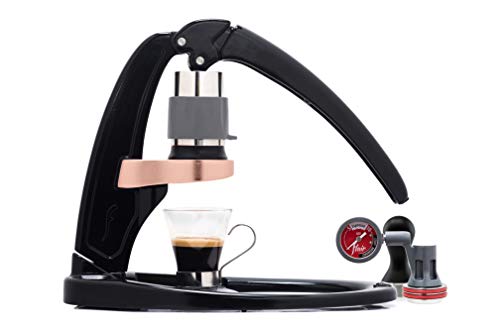
A fairly recent entry to the manual espresso maker scene, the Flair espresso maker is a very unique machine that you can just pack up and take with you wherever you go (hypothetically).
It’s not as truly portable as the Wacaco Minipresso, for example, but it comes with a neat case that it disassembles and fits into.
Overall, the Flair works like other levers in its class, giving you full control over the brewing variables — especially the extraction.
However, since this machine is designed to disassemble, there are a lot of parts that you need to take apart and clean to maintain the machine.
Additionally, there is no electricity, so you have to manually heat the brew chamber with boiling water, which is an added step.
As for a huge positive factor in favor of this machine, the price point is nearly unbeatable. You just can’t find a manual espresso machine capable of pulling shots of this caliber in this price range.
Read the full Flair espresso maker review here.
3. La Pavoni EPC-8 Europiccola 8-Cup Lever Style Espresso Machine
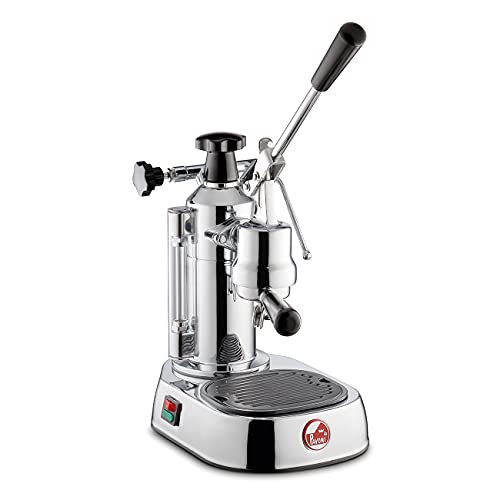
The Europiccola is another classic from La Pavoni. It can brew up to 8 shots in a single session, making it a solid choice for home use
There’s also a cappuccino steam wand as in the PC-16 above. The EPC-8 is a great choice for home use. It takes electricity to heat up the water and generate steam.
Whether that is a positive or negative is up to you to decide. Since the water is heated automatically, that means there is one less thing in your control.
However, it does mean there is the added convenience of not having to pre-heat anything.
As far as pulling the shot goes, that’s in your control, since you can take as long as you want or as short as you want to pull the lever down and extract the coffee.
4. La Pavoni PC-16 Professional Espresso Machine
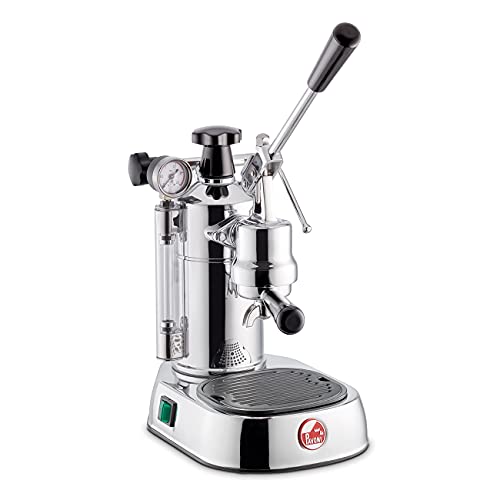
La Pavoni is one of the oldest and most respected names in espresso. For years, its lever machines were considered the gold standard. The craftsmanship and tradition behind their lever machines continues to shine, and the Professional PC-16 is one of their most recognizable offerings.
With that said, this is not a cheap machine. In fact, it costs more than many super automatic espresso machines.
Yikes!
It requires electricity to run as the water is heated in the machine itself. This is both an advantage and a disadvantage. The advantage is that you can steam milk for cappuccinos using the built-in steam wand.
The disadvantage is that it takes about 10 minutes to heat up, and you have to wait for it to cool down before you can add more water. So you can only pull 5-6 shots in one go, then wait for the machine to cool before pulling more shots.
That’s fine for smaller volumes, but that does not make this a good choice for pulling a lot of shots (like in an office).
As is the case with any manual espresso machine, there is a learning curve so you need to be prepared to practice a bit before getting it right.
5. Ponte Vecchio Lusso Lever Espresso Machine
The Elektra Microcasa a Leva used to be our pick in this spot, but since it’s no longer widely available, the Ponte Vecchio Lusso takes its place as a high-end, countertop lever machine.
This Italian-made espresso maker combines craftsmanship with serious espresso performance. For espresso purists, the Lusso carries the appeal of a boutique Italian brand — less mainstream than La Pavoni, but admired among coffee insiders for its craftsmanship, durability, and ability to deliver consistently rich shots.
The 1-group Lusso is the version best suited for home use, with a solid brass boiler for durability and temperature stability. It looks elegant on the counter and feels like a true heirloom piece. Larger 2- and 3-group models exist, but those are really intended for offices or small cafés rather than a home kitchen.
The Lusso works like other lever models in how you pull the shot by hand, but it has the added convenience of a built-in electric boiler. Just fill the reservoir, wait for it to reach pressure, and then extract your espresso.
It does take practice to master, but once you get the rhythm right, the Lusso delivers thick, rich espresso with plenty of crema that rivals what you’d get in a café.
Unlike smaller lever machines, the Lusso’s larger boiler means you can pull several shots in a row without waiting for the machine to recover. That makes it a good choice if you want something more substantial than an entry-level lever but still designed with the home barista in mind.
Conclusion
In this roundup, we’ve listed 5 powerhouse espresso makers that range from incredibly affordable to incredibly expensive. All of these machines depend on the hand of the barista more than the machine itself!
The La Pavoni machines and the Ponte Vecchio Lusso are superb choices if you’d like a single setup capable of brewing shots and steaming milk, as well as not having to worry about heating the water.
The Flair Neo Flex is a great choice for those of us on a budget that want to get into the world of manual brewing.
Either way, you need to keep in mind that the first few shots probably won’t come out the way you expected and that it will take quite a bit of practice to get it right.
More buying guides:
Are lever machines better than automatics?
Lever espresso machines allow you the most control over your espresso shot. They’re better in the sense that you can customize the shot to whatever you want. Automatic and semi-automatic machines are much more fixed in the way they pull shots, but if you don’t like the shot, there’s very little respite to change any variables.
Is 15 bar enough for espresso?
Some people maintain that 9 bars is enough, while others say that 15 bars is the correct amount. You should try both and see which one you like better! Generally, more pressure will generate more crema.
What grind size works best for espresso?
Espresso traditionally uses a fine grind. Go for something the consistency of fine sand.