
There are many different coffee brewing methods and each method has its pros and cons. The beauty of this is that you can use a single kind of bean to produce very different types of drinks depending on how you brew.
Each brew has a distinct flavor and mouthfeel, too. We’ll do our best to give you an overview of each brewing method here, but our best advice would be to actually try some of these methods and see which one you like best.
Broadly speaking, the coffee brewing process can be split into 5 categories:
- Brewing with gravity
- Brewing with immersion or steeping
- Brewing with pressure
- Brewing with boiling water
- Brewing with pods
No matter which way you brew, you’ll need to use good quality coffee! The best coffee machine will make a bad brew if you use stale coffee. So use freshly roasted, freshly ground coffee (click here to find the best coffee beans) and you’ll start noticing a huge difference right away!
Brewing methods that use gravity
Brewing with gravity is essentially pouring water over coffee grounds and letting the water drip through the coffee, through a paper filter (or metal), and into the cup below.
These are classic brewing methods and produce some of the best tasting, brightest coffees. I’ve tried quite a lot of brewing methods and have settled on pour over as my FAVORITE method. That’s why it’s the first on my list, too!
1. Hario V60
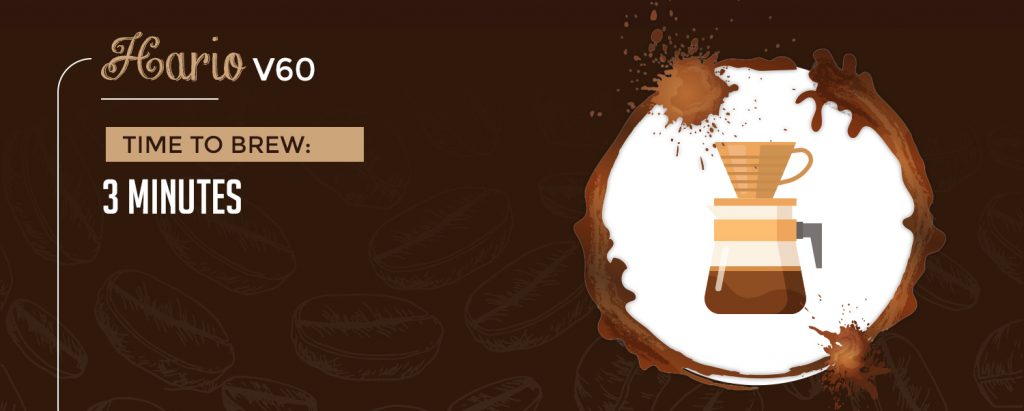
The Hario V60 is one of the most popular pour over brewers and for good reason. Even though the design looks quite simple and unassuming, it’s brilliantly designed and functional.
Essentially, it’s just a plastic funnel with a large opening at the bottom and ribs along the sides of the funnel.
The large opening is the genius of the design, as it puts more control in the hand of the pourer. A slow, steady pour will mean a longer, more flavorful extraction.
To get the best results, stick to using the special Hario filters.
It takes a bit of practice to get it right but once you’ve found something that you like it will be unlikely you go back to anything else again.
Time from bean to brew
Assuming you have an electric grinder, you’ll have your beans ready in 20-30 seconds.
The entire brew takes 2-3 minutes from start to finish. Once you have boiling water, you just have to wet the filter, add grounds, bloom, and slowly pour.
Grind required
The ideal grind size is medium-fine. So if you’re using an electric grinder, set it 2 or 3 notches below the middle setting. You can always adjust up or down if necessary.
Taste and mouthfeel
Hario V60 brews tend to be bright and clean. Fruity notes are very prominent (provided you’re using those types of beans) and thanks to the paper filter, it’s incredibly clean with zero grit.
Skill level
There’s a bit of a learning curve, but nothing you can’t master within a few tries.
Good for
Coffee lovers that relish the brewing process as much as they relish the final brew. Hario V60 brewing is an art!
Bad for
Folks who are in a hurry and not interested in a morning ritual for coffee.
Pros
- Inexpensive
- Available in multiple sizes from a single cup to 3 to 4 cups
- Super clean brew
Cons
- Works best with very specific filters
Read more about the Hario V60:
2. Chemex
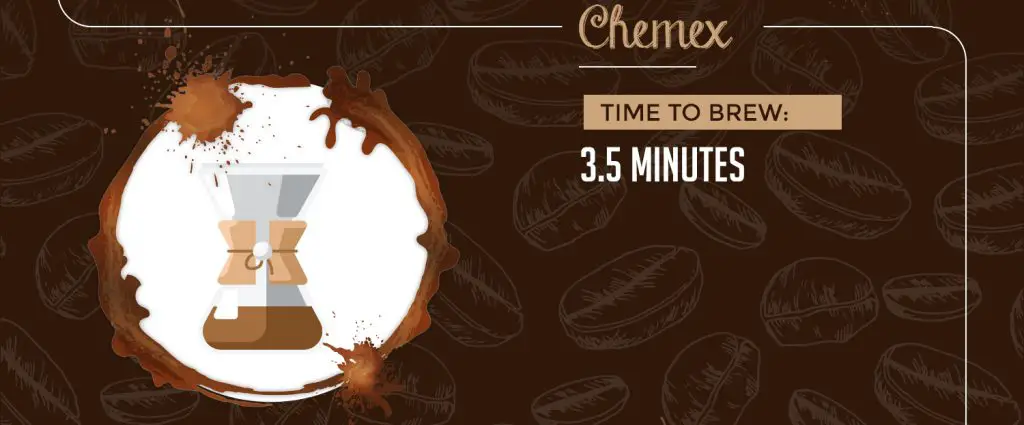
The Chemex is quite similar to the Hario V60 in that it’s also a pour over brewer, but the brewing method is actually quite different.
Not to mention that the Chemex happens to be gorgeous. It’s a work of art: the glass design, the wooden collar, the leather tie. It’s just iconic.
Chemex is available in 3 cup sizes and above, so it’s great if you brew more than one cup every time. For an individual drinking a single cup, you may find it inconvenient.
Here’s where things get interesting. The Chemex uses a special filter that’s very, very thick. Not only that, but you also have to fold the circular filter into a funnel, so one side will be one layer thick and the other side will be three layers thick.
That means longer extraction times, since the water has to travel through so many more barriers before dripping down.
To compensate for the longer brew time, many people advocate using a slightly coarser grind and more coffee.
Time from bean to brew
The Chemex takes a bit longer to brew than a Hario V60, so you’re looking at 3 to 3.5 minutes. This is assuming you use an electrical grinder and have hot water at the ready!
Grind required
On your electrical grinder, stick to the very middle setting. If you feel the coffee is under-extracted, you can try making the grind one or two notches finer. Alternatively, you can just use a higher ratio of coffee to water.
Taste and mouthfeel
If you thought V60 coffee was clean, Chemex coffee is even cleaner! The brightness and complexity of pour over is definitely going to be there.
Skill level
Pour over is generally a higher-skill brew, but you can get the hang of it within a few tries.
Good for
Pour over enthusiasts who want to buy an icon American brewer. Great if you brew more than 4 cups in one go.
Bad for
Folks who just want to brew a single cup.
Pros
- Gorgeous design, looks like a work of art
- Very clean coffee
Cons
- It’s made of glass, so it’s delicate!
- Filters are expensive
Read more about the Chemex:
3. Electric Drip Coffee Maker
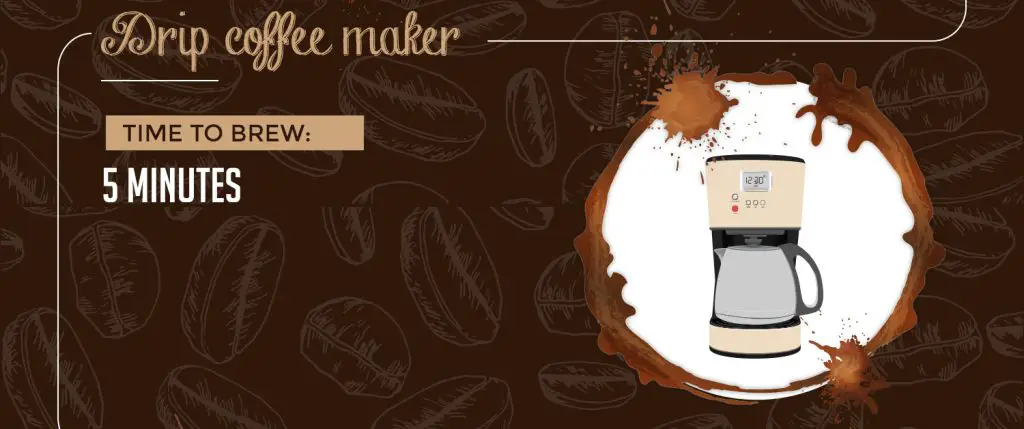
Drip coffee makers are the classic office and diner coffee maker. Dripping is what usually comes to mind when you think of making coffee. It’s just so ubiquitous!
One of the reasons dripping is such a popular way to make coffee is that it makes a brew very similar to pour over, and the whole process is automated.
Essentially, the process is the same: hot water is dripped onto a bed of ground coffee in a filter, and it filters through the coffee and paper filter into a pot below.
Not all drip coffee makers are created equally, though. Some don’t maintain temperature correctly, and some don’t distribute the water evenly.
High end coffee makers have features like a pre-wetting stage that wets the ground coffee to bloom it, then pulses hot water evenly all over the coffee for even extraction.
With these machines, you get what you pay for! See our favorite drip coffee makers here.
Time from bean to brew
Brewing time will depend on how much coffee you are brewing, but you can expect to have 2 to 3 cups ready in 5 minutes.
Many drip coffee makers have automatic brewing so you can set a timer for the coffee maker to brew coffee at a set time, so you can wake up to a cup of coffee.
Grind required
Automatic drip coffee makers need medium ground coffee. You can experiment a little by going a few notches finer.
Taste and mouthfeel
Dripped coffee is much like pour over: clean, bright, and flavorful.
Skill level
Since the machine is doing all the work, you just have to put ground coffee in the filter and start the machine! Dripped coffee is about as easy as it can get to make some good coffee.
Good for
Almost anyone! These machines are incredibly flexible. Drip coffee makers are best for households/settings where you want a pot of coffee at the ready as opposed to just one cup.
Bad for
Almost no one! Everyone can use and enjoy a drip coffee maker, though you may find it difficult to brew just a single cup.
Pros
- Easy to use
- Brews great coffee
- You can set a timer to have a pot ready on demand
Cons
- Difficult to brew just one serving
Read more about drip coffee makers:
4. Kalita Wave
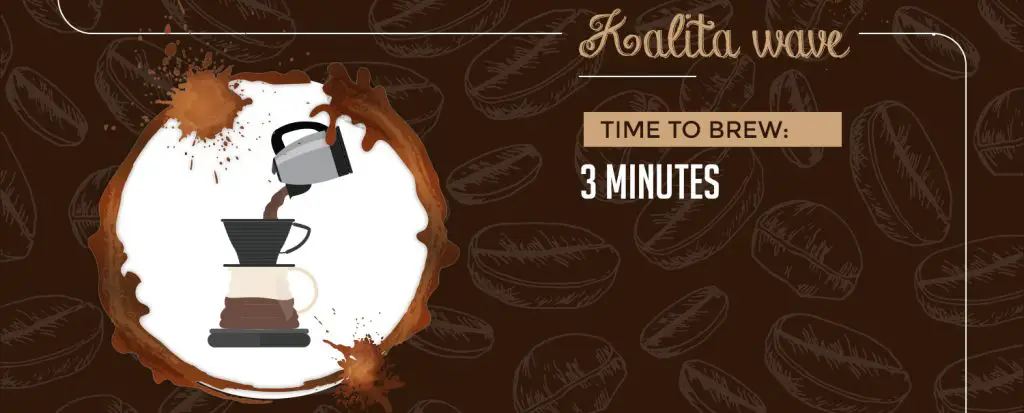
The Kalita Wave is an excellent pour over method that goes head to head against the V60 and the Chemex. Like the V60, the Kalita Wave is a simple little device that you just put on top of your cup, put a filter in, add ground coffee, and start brewing.
However, the key difference between the Kalita Wave and the V60 is that the Kalita Wave has a flat bottom with three small holes in it.
The filters are also flat bottomed to fit in the design.
This means that the speed of the pour is no longer as important a factor as it is in the V60, since the hot water and coffee will mix and slowly drip down.
As a result, the brew is much more forgiving and eliminates the pouring speed variable.
Time from bean to brew
You’re looking at about 30 seconds to bloom and another 3 minutes or so for the brew.
Grind required
Since this is a pour over brew, you want a medium grind. You can go one or two notches finer if you want.
Taste and mouthfeel
Like all drip coffee and pour over coffee, expect a clean cup of coffee with very pronounced flavors.
Skill level
Because the flat bottom eliminates the pouring speed variable, the Wave is a forgiving brewer and you’ll end up with a nice, consistent cup of coffee as long as you can keep the grind, dose, and amount of water consistent.
Good for
Someone who wants to enjoy pour over coffee but does not want to mess around with gooseneck kettles and controlled, slow pours.
Bad for
Coffee artisans that absolutely must use their gooseneck kettles and show off how their pouring finesse makes or breaks their cup of coffee.
Pros
- Easy to use
- Comes in different sizes
- Very convenient
Cons
- There’s some debate as to how effective the three holes actually are
Brewing methods that use immersion
5. French press
French press coffee is in many eyes the classic coffee. It’s been around for a long time and if you’ve come from a household of coffee drinkers chances are your parents have one and so do your grandparents.
Why are french presses so universally loved? Well, for starters, they’re cheap and they brew great coffee. They’re also really easy to use and clean.
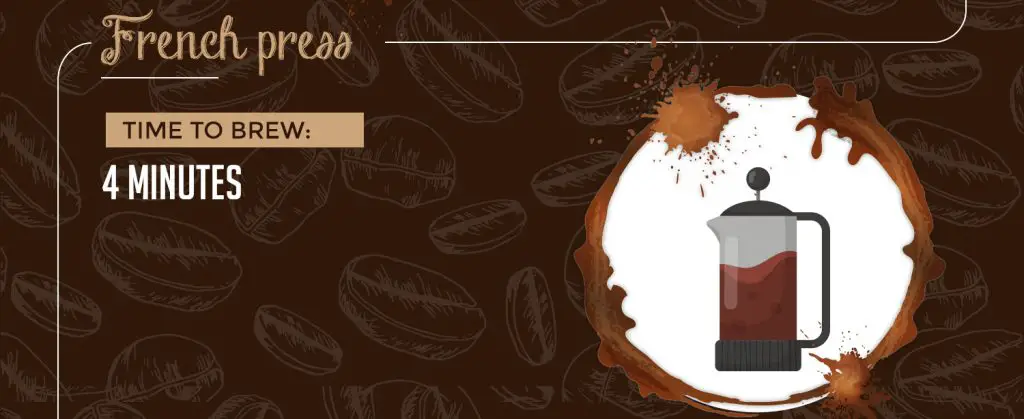
French press is a medium-time-consuming brew method. Once you add hot water to coffee grounds, you need to let it steep for 4 minutes before plunging and pouring the coffee out.
You can try 5 or 6 minutes for a stronger brew but I personally prefer 4 minutes as the sweet spot.
It actually takes a little longer for the entire brew as you need to grind the coffee beans, heat up the water (remember the temperature!) and finally steep the coffee.
However, even if you get the grinds perfect, some will still find their way into your cup so you may find the last one or two sips to be a little gritty.
All things said, french press brews really unique and flavorful coffee that is almost universally enjoyed.
Time from bean to brew
You need to steep french press coffee for 4 minutes. Then you can plunge down and enjoy.
Grind required
Of all the hot water brews, french presses need the coarsest grinds. If your grind is too fine, it will pass through the filter and you’ll end up with a gritty, bitter coffee.
Taste and mouthfeel
French press has a full bodied mouthfeel and tends to be very bold. The distinction is noticed best when you compare french press to pour over.
Skill level
Relatively foolproof. There is not much to do except add coffee to water and let it sit!
Good for
Folks who prefer strong, dark brews. The thick mouthfeel is very satisfying, and you can rarely go wrong with french press.
Bad for
Folks who don’t like intense, bold coffee. French press is best suited to darker roasts, so if you’re a light roast person, you may not really enjoy the resulting brew. In that case, pour over or drip would be better.
Pros
- Easy to brew
- Rich flavor
Cons
- Slightly gritty coffee
Read more about the French Press:
- How To Use a French Press
- French press vs pour over coffee
- 9 Best French Press Coffee Makers
- Best Coffee Grinder for French Press
- French Press Cold Brew
- How To Make Iced Coffee With French Press
- Double Brewed Coffee
6. Vacuum Pot
The vacuum pot is a super interesting brewing method that will make you feel like a mad scientist rather than a barista.
Brewing vacuum or siphon coffee is incredibly involved! It’s not the easiest process in the world, either.
Vacuum pot coffee is a mix of immersion and pressure. First, the coffee is steeped in hot water, then sucked into another chamber through vacuum action.
Unless you get the timing right, there’s a good change you will screw it up. But if you can brew it correctly, you may taste the best coffee of your life.
Time from bean to brew
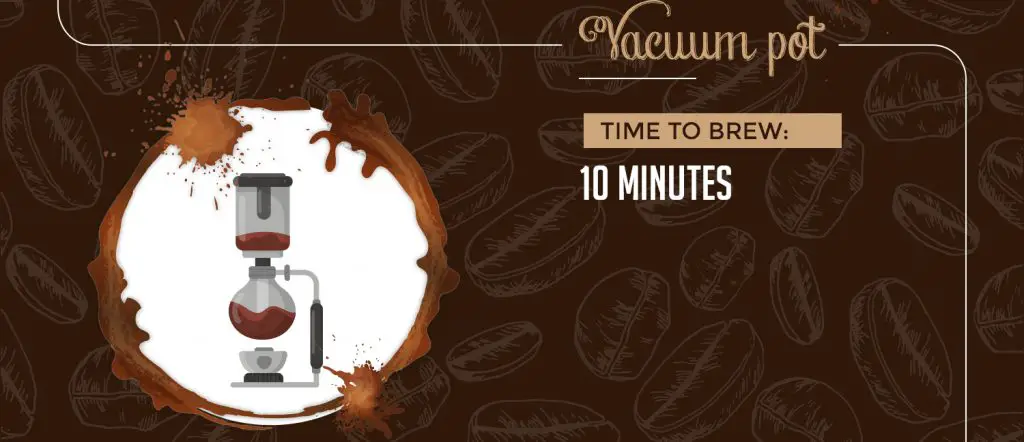
This is a very involved process so you’re looking at 10 minutes for the whole brew.
Grind required
Use a medium grind for best results. If needed, you can adjust a couple of notches up tow